
Did you know that as of 2026, over 20 million Americans navigate daily life with ambulatory challenges that make traditional exercise feel out of reach? If you've ever felt that your body is a barrier rather than a bridge to wellness, you're not alone. It's natural to feel frustrated by physical limitations or to worry that movement might lead to discomfort. However, yoga for limited mobility isn't about forcing yourself into rigid shapes; it's about inviting the practice to meet you exactly where you are today.
At Wellness Enriched, we believe that every person deserves to breathe, move, and restore their sense of self. We understand the desire to reclaim your movement and inner peace through gentle, adaptive poses designed for every body. By following this guide, you'll learn how to reduce joint stiffness, improve your emotional balance, and cultivate a deep sense of physical accomplishment. We'll explore five accessible poses that prioritize your safety and comfort, helping you transition from a place of hesitation to one of rhythmic, intentional strength.
Key Takeaways
- Redefine movement as an invitational spectrum that honors your body's unique state, prioritizing safety and restorative comfort.
- Establish a stable foundation for your practice by selecting supportive equipment and creating a sensory-friendly environment for nervous system regulation.
- Master five gentle poses for yoga for limited mobility that utilize rhythmic breathing to transform physical alignment and enhance stability.
- Integrate the healing vibrations of sound and the power of breathwork to deepen your relaxation and foster a sense of holistic equilibrium.
- Discover personalized wellness opportunities in the Phoenix metro area that offer professional guidance in the comfort of your own home.
Redefining Movement: How Yoga Adapts to Your Body’s Unique Needs
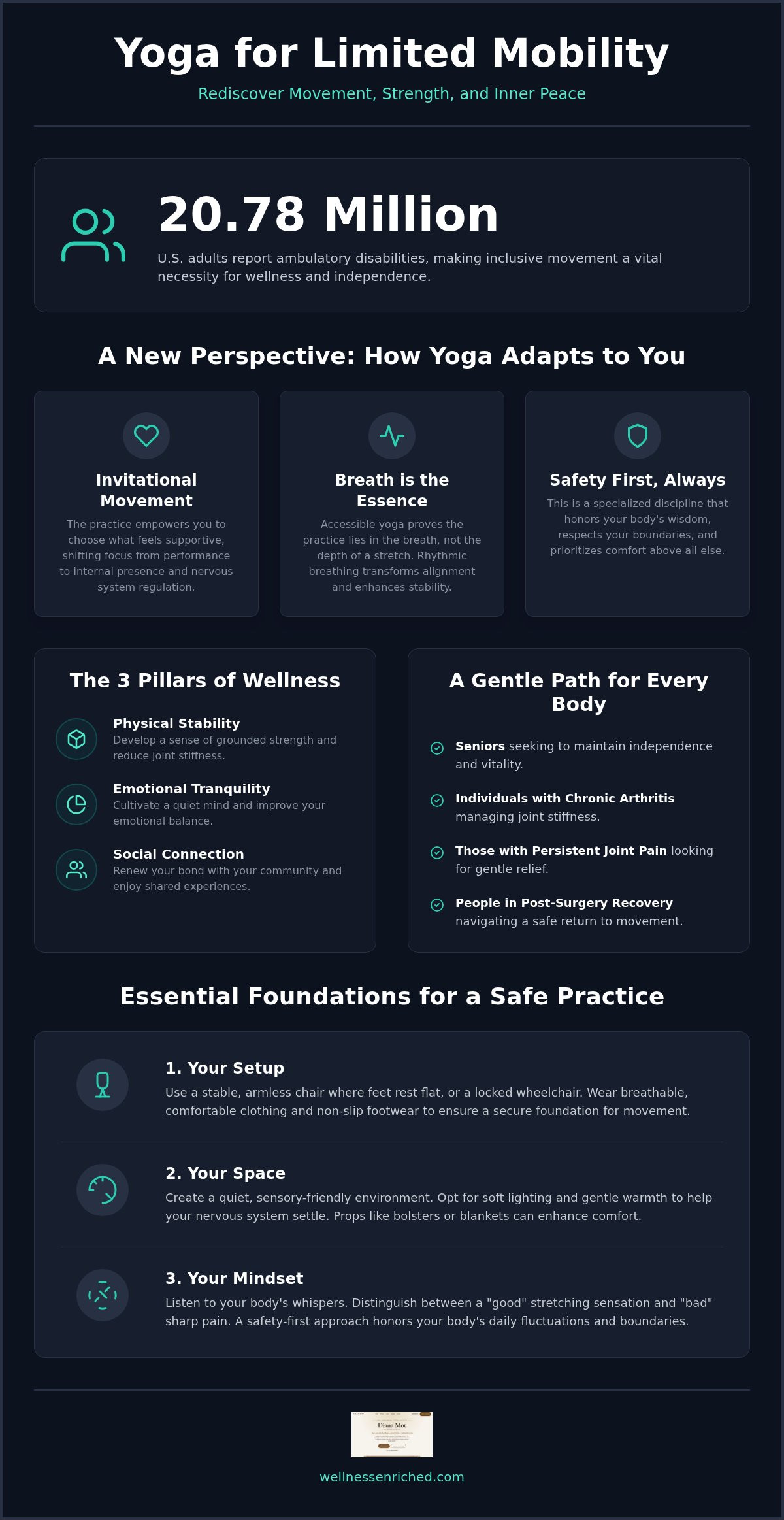
Yoga is often portrayed as a series of complex, gravity-defying shapes. However, Accessible yoga proves that the essence of the practice lies in the breath, not the depth of a stretch. Yoga for limited mobility is a restorative, adaptive practice that prioritizes your safety and comfort above all else. It's a gentle invitation to return to your body, recognizing that movement is a spectrum rather than a rigid set of rules or high-intensity goals. You don't need to stand on a mat or sit on the floor to experience a profound transformation.
When we adapt the practice to meet your needs, we cultivate three essential pillars of wellness: physical stability, emotional tranquility, and social connection. By honoring your current state, you develop a sense of grounded strength, a quiet mind, and a renewed bond with your community. This isn't "modified" yoga in a way that suggests it's incomplete; it's a specialized discipline that acknowledges the wisdom of your physical experience and respects your boundaries.
The Philosophy of Invitational Movement
In our sessions, we emphasize the importance of listening to your body’s whispers before they become shouts. A compassionate facilitator doesn't act as a traditional coach pushing for more reps. Instead, they serve as a guide who uses intentional, invitational language. When an instructor says, "I invite you to explore this movement," they empower you to choose the depth that feels supportive. This approach shifts the focus from external performance to internal presence. It allows you to regulate your nervous system, find your center, and build lasting resilience.
Who Can Benefit from Adaptive Yoga?
This practice serves a wide range of individuals seeking to regain their sense of bodily agency and confidence. It's particularly effective for seniors in retirement communities, such as those in Sun City or Surprise, who want to maintain their independence and vitality. According to 2023 data from the American Community Survey, approximately 20.78 million people in the U.S. report ambulatory disabilities, making inclusive movement a vital necessity. Whether you're managing chronic arthritis, navigating persistent joint pain, or recovering from a recent surgical procedure, yoga for limited mobility provides a safe harbor. It allows those with mobility challenges to experience the joy of movement without the fear of injury. This gentle enrichment helps participants rediscover their strength, celebrate their progress, and enjoy the warmth of social connection.
Essential Foundations: Preparing for a Safe and Restorative Practice
Before you begin your journey with yoga for limited mobility, it's essential to cultivate a foundation of safety. Choose a stable, armless chair that allows your feet to rest flat on the floor, or ensure your wheelchair locks are securely engaged. Wear clothing that moves with you, favoring breathable natural fibers and non-slip footwear to maintain your balance. This physical preparation is the first step toward a practice that feels both reliable and restorative. By honoring your body’s needs from the start, you create a sense of professional reliability and personal safety.
Preparation isn't just about the equipment you use; it's about the intention you bring to the space. Take a moment to check in with your energy levels and physical boundaries today. Your body’s capacity may shift from one afternoon to the next, and a mindful practice respects these fluctuations. If you're looking for guidance in your own home, our gentle yoga sessions provide a personalized approach to these essential foundations.
Creating Your Sacred Space
A quiet, sensory-friendly environment is vital for regulating the nervous system and deepening your experience. Aim for soft lighting, gentle warmth, and quiet stillness to help your mind settle. You might incorporate props like eye pillows, weighted blankets, or soft bolsters to enhance your final relaxation. Remember that a safety-first mindset is the most important tool you bring to the mat. In our mobile sessions for residents in Sun City and Surprise, we prioritize these environmental details to ensure every participant feels cared for and understood.
Initial Assessment and Boundary Setting
Understanding the language of your body is a skill that grows with time. It's important to distinguish between "good pain," such as the warm sensation of a muscle lengthening, and "bad pain," which feels sharp, sudden, or electric. If you encounter the latter, gently back out of the pose and return to your breath. Always consult with your healthcare provider before beginning a new wellness routine to ensure the movements align with your medical history. As you settle in, set a personal intention for your practice. Whether you focus on inner peace, physical strength, or simple presence, let this intention guide your movements with rhythmic grace and quiet confidence.
5 Gentle Yoga Poses for Limited Mobility and Enhanced Stability
Each pose serves as a gentle gateway to transformation, shifting the focus from how a posture looks to how it feels within your unique frame. In our practice of yoga for limited mobility, we prioritize the synchronization of movement with rhythmic breathing to create a sense of internal equilibrium. This approach ensures that every participant, regardless of their current physical capacity, can experience the profound benefits of a dedicated practice. We focus on the quality of the experience, the depth of the breath, and the stillness of the mind.
Seated Mountain and Side Stretches
Begin by grounding your feet firmly on the floor or your footrests, feeling the connection to the earth beneath you. Lengthen your spine upward, imagining a soft thread pulling the crown of your head toward the sky while keeping your shoulders relaxed and down. Seated Mountain is the foundation of all seated stability. From this grounded center, gently reach one arm toward the ceiling or simply lean your torso to the side. These intentional side bends open the intercostal muscles between the ribs, which helps improve lung capacity and invites a deeper, more restorative breath.
Adaptive Cat-Cow and Spinal Twists
To release tension in the lower back, we utilize the rhythmic motion of Cat-Cow. On an inhale, gently lift your chest and look slightly upward; on an exhale, round your spine and tuck your chin toward your chest. This movement hydrates the spinal discs, encourages a sense of fluidity, and releases stored stress. Follow this with a safe seated twist by placing one hand on the opposite knee and gently rotating from the navel. These twists aid digestion and maintain spinal health. Throughout the movement, keep your neck soft and your jaw relaxed to prevent unnecessary strain on the nervous system.
Seated Forward Fold and Leg Extensions
A gentle seated forward fold acts as a powerful tool to calm the nervous system. Rest your hands on your thighs and slowly hinge forward from the hips, allowing your hamstrings to stretch and your mind to settle into quiet stillness. For those focusing on knee stability, leg extensions are highly effective. You can use a strap for support or simply lift one foot off the floor while keeping the knee slightly bent. Even if your range of motion is small, these micro-movements are vital for those with significant restrictions, as they maintain joint health, promote circulation, and foster independence. Yoga for limited mobility honors these subtle shifts, celebrating every small victory in your wellness journey.
Beyond the Physical: Integrating Breathwork and Sound for Holistic Healing
While physical postures are vital, they represent only one facet of a complete practice. Yoga for limited mobility finds its true depth when we integrate the subtle power of the breath and the resonant frequencies of sound. This holistic approach addresses the emotional weight of physical limitations, offering a path to tranquility that doesn't rely solely on joint range. By weaving these elements together, we create a practice that is as much about mental resilience as it is about physical stability. It's a method of reclaiming your agency, soothing your spirit, and honoring your body’s current capacity with grace.
Movement, breath, and sound form a tripartite foundation for total wellbeing. This combination ensures that the nervous system is not just stimulated, but truly regulated. When we move with intention, breathe with awareness, and listen with presence, we move beyond the frustration of what the body cannot do. Instead, we focus on the expansive potential of what the body can feel. This shift in perspective is the heart of a restorative practice, guiding you toward a state of equilibrium that feels both medically informed and spiritually grounded.
Gentle Breathwork for Mental Clarity
Pranayama, or mindful breathing, serves as the essential bridge between the physical body and the quiet mind. Simple belly breathing is an accessible technique that can be practiced anywhere, from a busy waiting room to the comfort of your living room. By placing a hand on the abdomen and feeling it rise with each inhale, you signal to your brain that it's time to transition from "fight or flight" to "rest and digest." This intentional act lowers cortisol levels, improves cognitive focus, and fosters a sense of inner calm. For moments of immediate physical or mental tension, the "Sighing Breath" offers instant relief. A deep, full inhale followed by a long, audible exhale allows for the immediate release of stored stress.
The Role of Sound in Restorative Yoga
Sound healing provides a unique restorative experience that complements gentle movement with professional reliability. A sound bath involves being immersed in the rhythmic vibrations of singing bowls, gongs, or chimes, which encourage relaxation at a cellular level. The science of vibration suggests that specific frequencies can help regulate the autonomic nervous system and significantly reduce anxiety. You can even participate in this healing process by integrating soft humming or gentle chanting to stimulate the vagus nerve. Our sound healing and relaxation sessions are designed to guide you through this immersive journey, ensuring you feel cared for and understood at every touchpoint. This auditory layer deepens the meditative state, making the benefits of your practice last long after you leave your chair.
Cultivating Your Practice in the Phoenix Valley: Personalized Wellness Paths
The journey toward restoration is deeply personal, yet it thrives within a supportive community. In the vibrant Phoenix Valley, finding specialized yoga for limited mobility shouldn't feel like an uphill climb. Whether you reside in the quiet neighborhoods of Scottsdale, the community centers of Glendale, or the growing spaces of Peoria, accessible wellness is closer than you think. Our mission is to bridge the gap between physical discipline and emotional tranquility, bringing professional, mobile services directly to your doorstep or community room. This local focus ensures that your practice isn't just a set of exercises, but a rhythmic part of your daily life.
Residents in Sun City and Surprise often face unique challenges when seeking movement programs that honor their pace. We've designed our mobile chair yoga programs specifically for assisted living and senior communities, ensuring that every participant feels safe, seen, and supported. By joining a community that values inclusive, compassionate movement, you reclaim more than just flexibility; you reclaim your sense of belonging. This social connection is a vital component of holistic healing, helping to dissolve the isolation that physical limitations can sometimes bring.
Why Local, Personalized Support Matters
Working with a certified instructor who understands the nuances of adaptive movement is an invaluable ally. A professional who is deeply rooted in the Phoenix area brings a level of care that goes beyond a generic video or a crowded gym class. This personalized support allows for:
- Tailored Sessions: Every movement is adjusted to your specific physical and emotional state on any given day.
- Social Integration: Group programs in local community centers foster social joy and lasting friendships with neighbors.
- Expert Guidance: Instructors who prioritize the connection between physical discipline and nervous system regulation.
At Wellness Enriched, we pride ourselves on being compassionate facilitators. We understand that your body has its own wisdom, and our role is to guide you in listening to those cues. By focusing on your individual experience, we help you build a practice that feels both medically informed and spiritually grounded.
Next Steps: Your Invitation to Wellness
Taking the first step toward a new wellness routine requires courage and a safety-first mindset. When you're ready to explore what's possible, look for a local partner who emphasizes inclusive movement and has a proven track record with senior and community programs. A quality wellness partner will offer a clear, logical progression that mirrors a well-paced wellness session, moving seamlessly from physical benefits to mental clarity. We invite you to experience this gentle transformation for yourself. Begin your journey with Wellness Enriched today by booking an initial consultation to create a personalized wellness plan that honors your body and restores your peace.
Embracing Your Path to Vitality and Peace
Reclaiming your movement is a gentle journey of transformation, one that honors your body's wisdom and respects its boundaries. We've explored how adaptive poses, intentional breathwork, and restorative sound healing create a complete tapestry of wellbeing. By shifting the focus from physical perfection to internal presence, you can reduce stiffness and cultivate a deep sense of accomplishment. Yoga for limited mobility isn't just about the shapes you make; it's about the peace you find within those movements and the social connections you build along the way.
As a Certified Yoga Teacher and Wellness Coach specializing in senior and community enrichment, I'm dedicated to providing professional, mobile services across Sun City, Surprise, and Peoria. Whether you're seeking private sessions in the comfort of your home or group programs in your community, the goal remains the same: to help you feel cared for, understood, and empowered. Explore Personalized Wellness Programs in Phoenix and Scottsdale to begin your own restorative chapter. You possess the strength to find balance, the breath to find calm, and the community to find joy. We look forward to walking this path with you.
Frequently Asked Questions
Is yoga for limited mobility effective if I only sit in a chair?
Absolutely, practicing yoga from a seated position is highly effective for building core strength, improving spinal health, and enhancing respiratory capacity. By utilizing a stable chair, you eliminate the fear of falling and can focus entirely on the rhythmic alignment of your body. This approach provides a safe foundation for gentle transformation, mental clarity, and lasting physical stability.
How often should I practice gentle yoga to see results?
Aiming for two to three sessions per week is an ideal way to begin noticing improvements in joint stiffness and emotional balance. Consistency matters more than the length of each session; even fifteen minutes of daily mindful movement can yield significant benefits. Over time, this steady practice fosters a sense of physical accomplishment, inner peace, and improved mobility.
Do I need a doctor’s permission to start chair yoga?
You should always consult with your healthcare provider before beginning any new wellness routine, especially if you are managing chronic conditions or recovering from surgery. A professional medical assessment ensures that the specific movements are safe for your unique physical needs. This step establishes a foundation of safety, professional reliability, and peace of mind as you begin your practice.
Can yoga help with my balance and prevent falls?
Yes, yoga for limited mobility is specifically designed to strengthen the stabilizing muscles of the core and improve your overall proprioception. By focusing on grounding techniques and mindful weight shifts, you enhance your body's awareness in space. This increased stability helps reduce the risk of falls, builds physical confidence, and promotes a greater sense of independence.
What if I cannot move my legs or arms through the full range of motion?
The essence of adaptive yoga lies in the intention and the breath rather than the physical depth of the pose. We utilize micro-movements and visualization techniques to engage the nervous system even when physical range is restricted. This approach honors your body’s current state, encourages gentle circulation, and ensures that the practice remains restorative for every participant.
How does sound healing work with yoga for limited mobility?
Sound healing utilizes rhythmic vibrations to regulate the autonomic nervous system and deepen the relaxation initiated by physical movement. When combined with yoga for limited mobility, sound frequencies help transition the body from a state of stress to one of restoration. This integration creates a unique restorative experience that balances the body, settles the mind, and soothes the spirit.
Are there mobile yoga instructors for seniors in the Phoenix area?
Wellness Enriched provides specialized mobile services for residents in Sun City, Surprise, and Peoria, bringing the practice directly to your home or community. Our certified instructors understand the unique needs of seniors and offer personalized sessions that prioritize safety and comfort. This mobile approach removes the barrier of travel, fostering social connection and physical wellness within your own neighborhood.
What should I wear to my first gentle yoga session?
Select clothing that is loose, breathable, and comfortable to allow for a full range of gentle movement. It's also important to wear non-slip footwear or specialized yoga socks to maintain a stable connection with the floor. Choosing the right attire ensures that you can focus on your breath, your movement, and your journey toward tranquility without distraction.
